Brill
Designing speed and clarity in idea capture and collaboration
Context
0→1 mobile app · Capture → structured output → export · iOS & Android · Integrations (Jira/Trello/Slack) · Apple recognition
Role summary
Co-founder & Product Design Lead. Responsible for defining the product’s core value proposition (speed), translating it into a shippable roadmap, and ensuring a high-quality experience across platforms and integrations.
The challenge
Workshops and collaborative sessions often generate valuable insights, but much of that momentum is lost afterwards. Teams spend hours manually digitising handwritten notes, sticky notes and whiteboards. This creates delays, reduces engagement and weakens the impact of collaborative work.
Existing tools focused on storage and organisation, not speed. The opportunity was to design a product that could turn physical insights into structured, digital outputs almost instantly, making it easier for teams to move from ideas to action.
The challenge was not just technical. It was behavioural. People needed a tool that felt faster and more natural than typing, and that integrated seamlessly with the tools they already used.
Scope
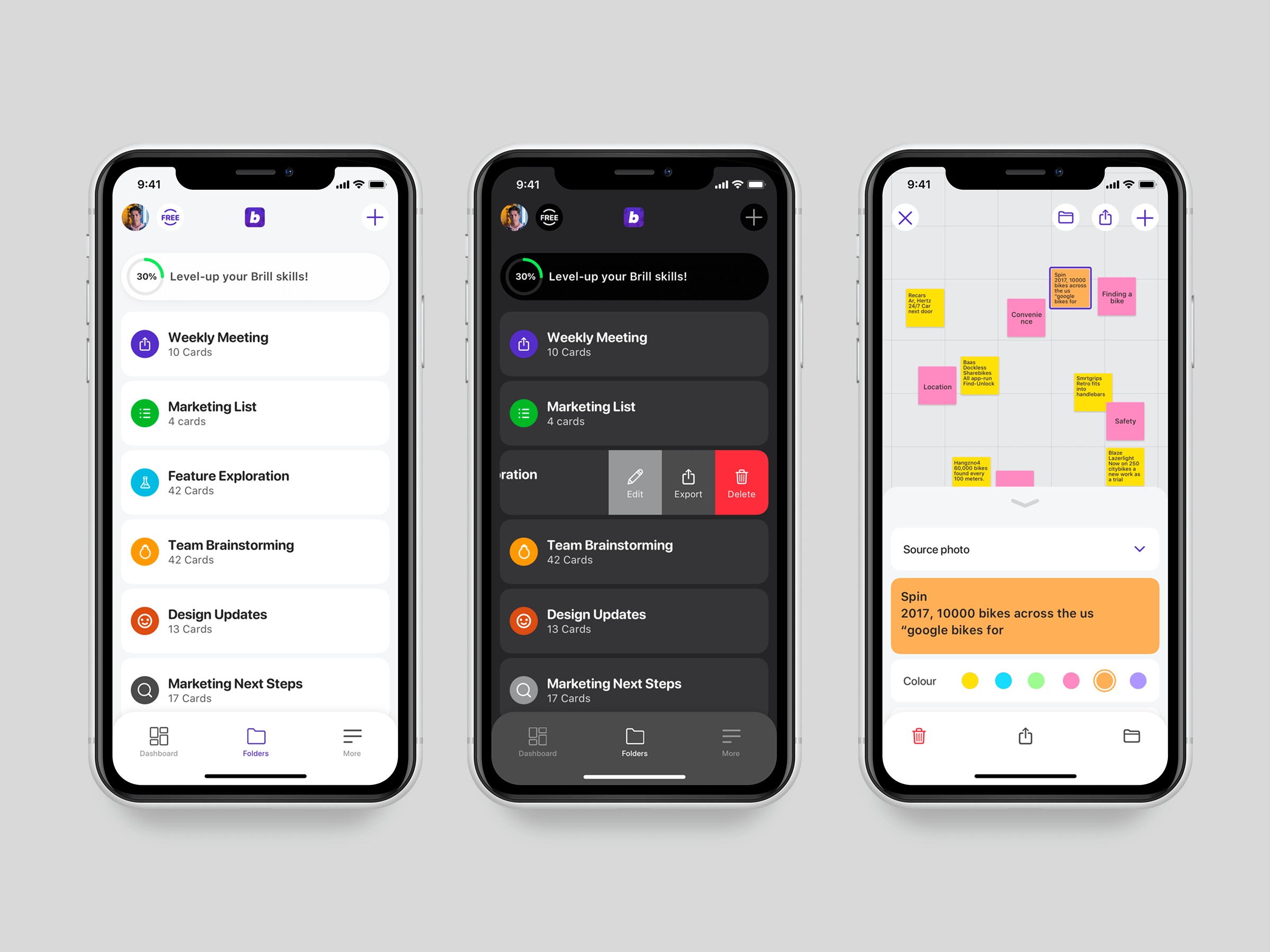
Brill was a 0→1 mobile product, built to capture, structure and share ideas in seconds. The focus was on speed, simplicity and real-world workflows.
The product needed to:
Work reliably in fast-paced environments
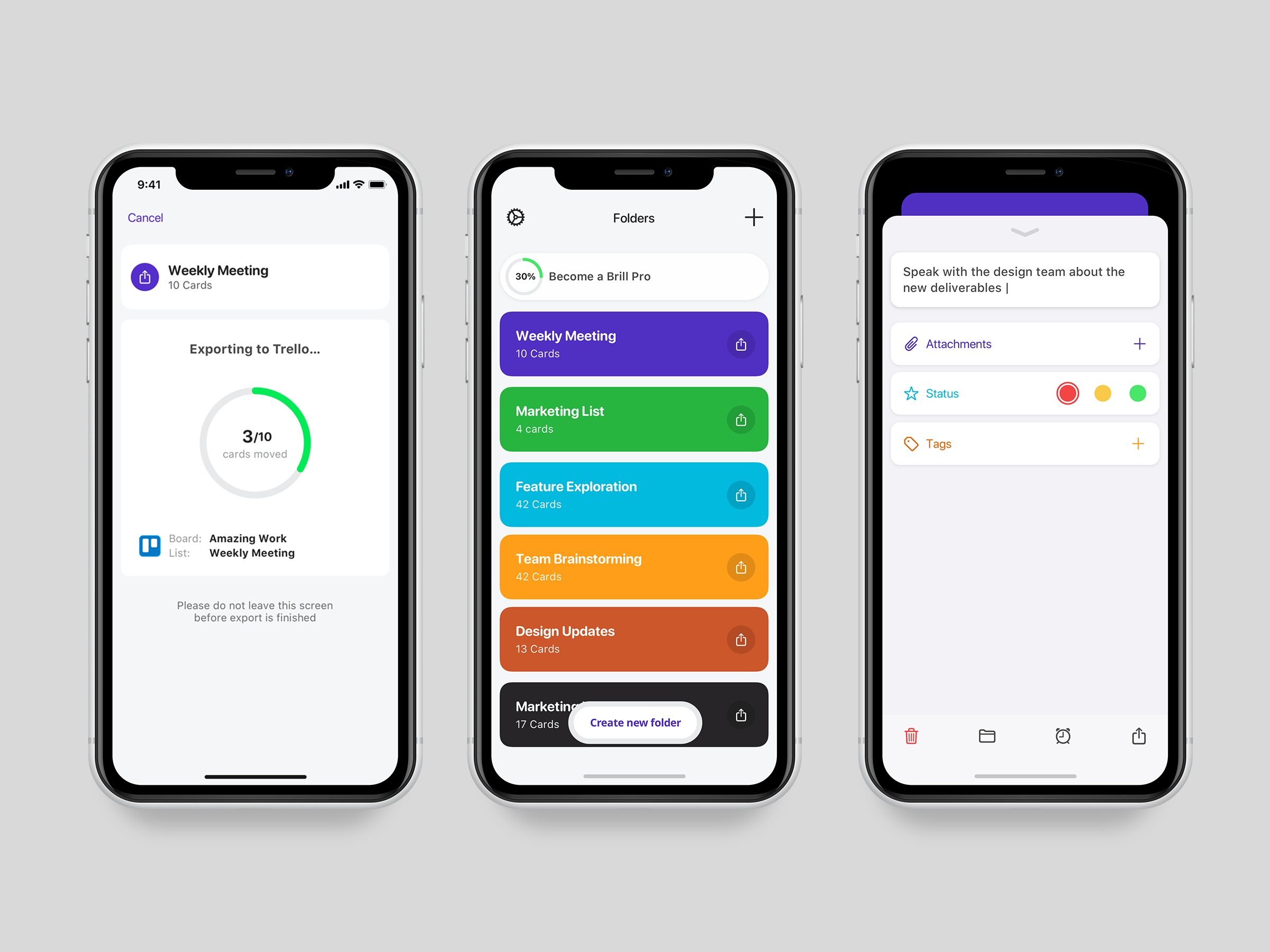
Integrate with tools such as Jira, Trello and Slack
Scale from individual use to team collaboration
Adapt quickly to changing customer needs.
My role
As Co-founder and Product Design Lead, I defined the product vision and led design across the entire lifecycle, from discovery to launch.
This included:
Customer research and product strategy
UX and interaction design
Visual direction and brand
Rapid prototyping and experimentation
Collaboration with engineering
Go-to-market and product positioning.
Working in a small, agile team meant balancing long-term thinking with fast execution and constant learning.
A founder moment
One early moment shaped the product direction. We (the other two co-founders and I) were working at the same tech agency, where we noticed that workshop participants spent hours manually typing their notes after each session. The energy of the discussion had completely disappeared. Sometimes this process happened even 3 days after a workshop. What should have been a moment of alignment turned into a slow administrative task.
This made it clear that the real problem was not organising information, but preserving momentum. From that point, we focused on speed and immediacy as the core values of the product, and every design decision was evaluated against that principle.
Key moves
Speed as the core differentiator
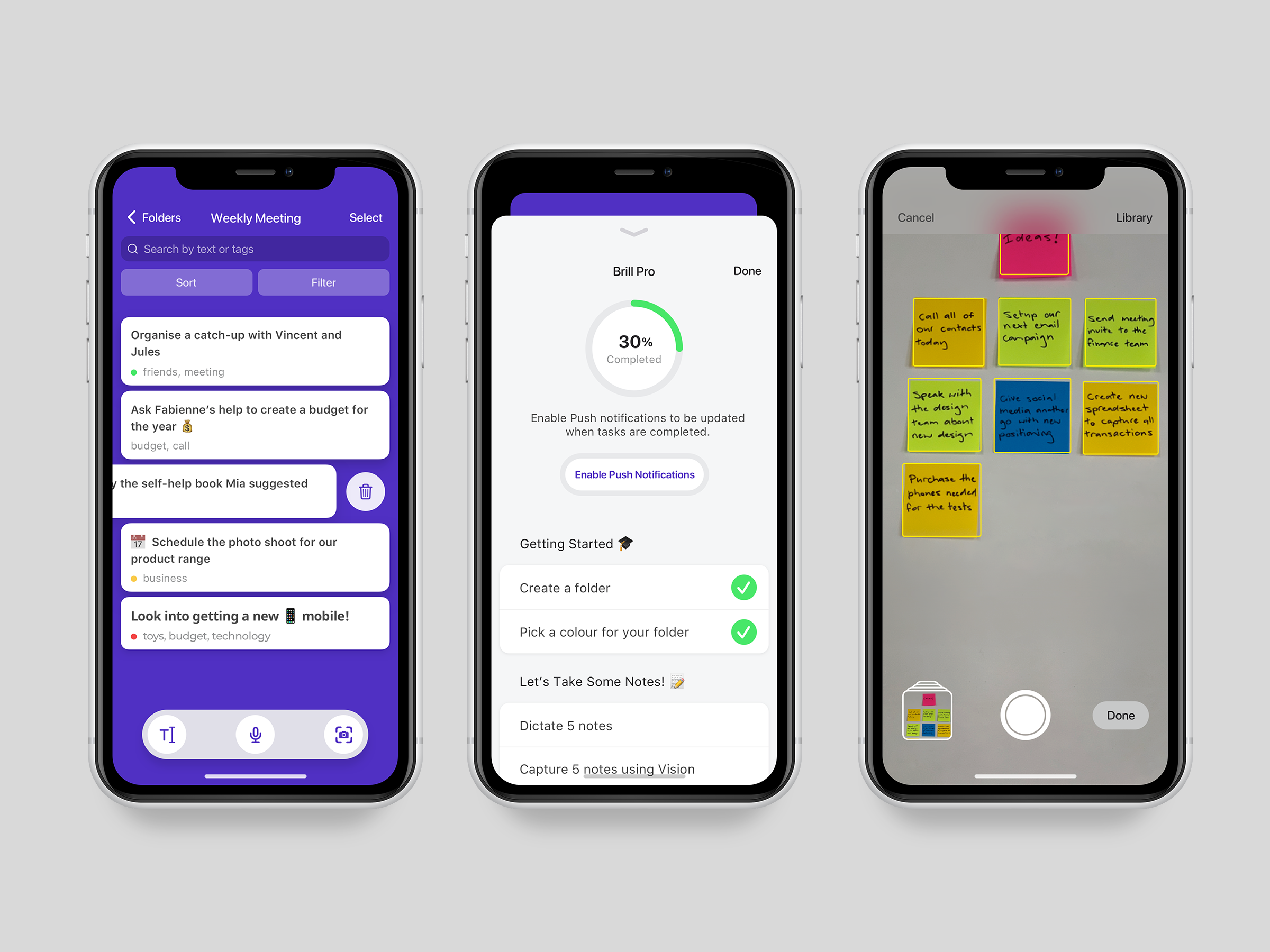
Rather than competing on features, we focused on speed as the primary value. The goal was to make digitising notes significantly faster than typing, enabling users to capture insights while the session's energy was still high.
Designing for real-world behaviour
The product was designed around how people actually work: standing, moving, collaborating and improvising. This led to a mobile-first approach and simple, intuitive flows.
From capture to workflow
Instead of acting as a repository, Brill connected directly to project and collaboration tools. This positioned the product as part of everyday workflows rather than a standalone app.
Rapid experimentation
We tested multiple capture and export approaches, learning quickly from user feedback. This helped refine the core experience and prioritise what truly mattered.
Adapting during uncertainty
During the pandemic, customer behaviour shifted. We adapted the product to support remote collaboration and hybrid workflows, ensuring relevance in changing conditions.
A founder moment 2
At one point, we faced pressure to expand from the UK into the US. The opportunity was clear, but moving too quickly risked slowing core product improvement and diluting our focus.
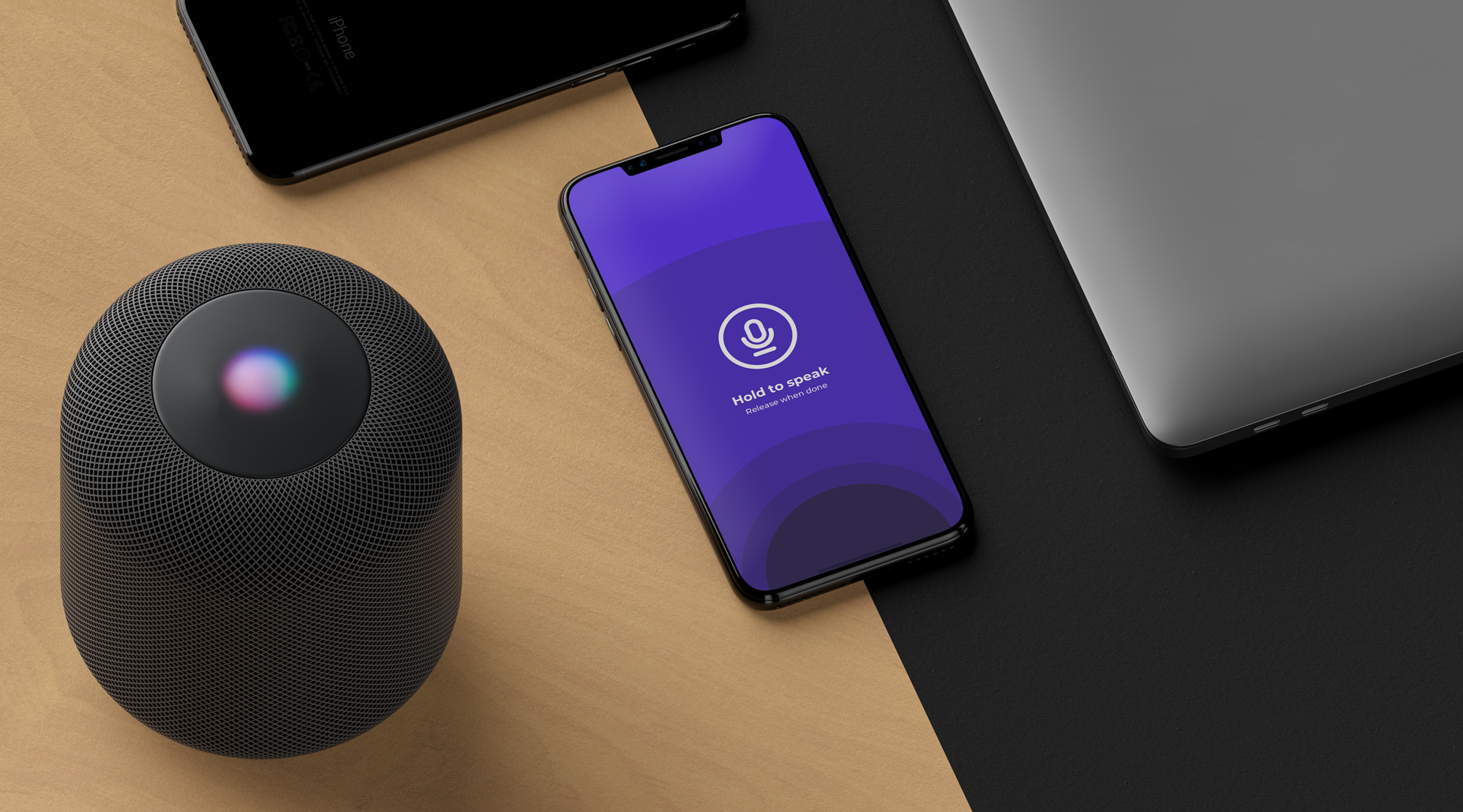
We chose to prioritise a narrow, high-impact use case: capturing and structuring insights faster than any alternative, especially through voice. This meant saying no to many logical features and expansion requests in order to protect clarity and speed.
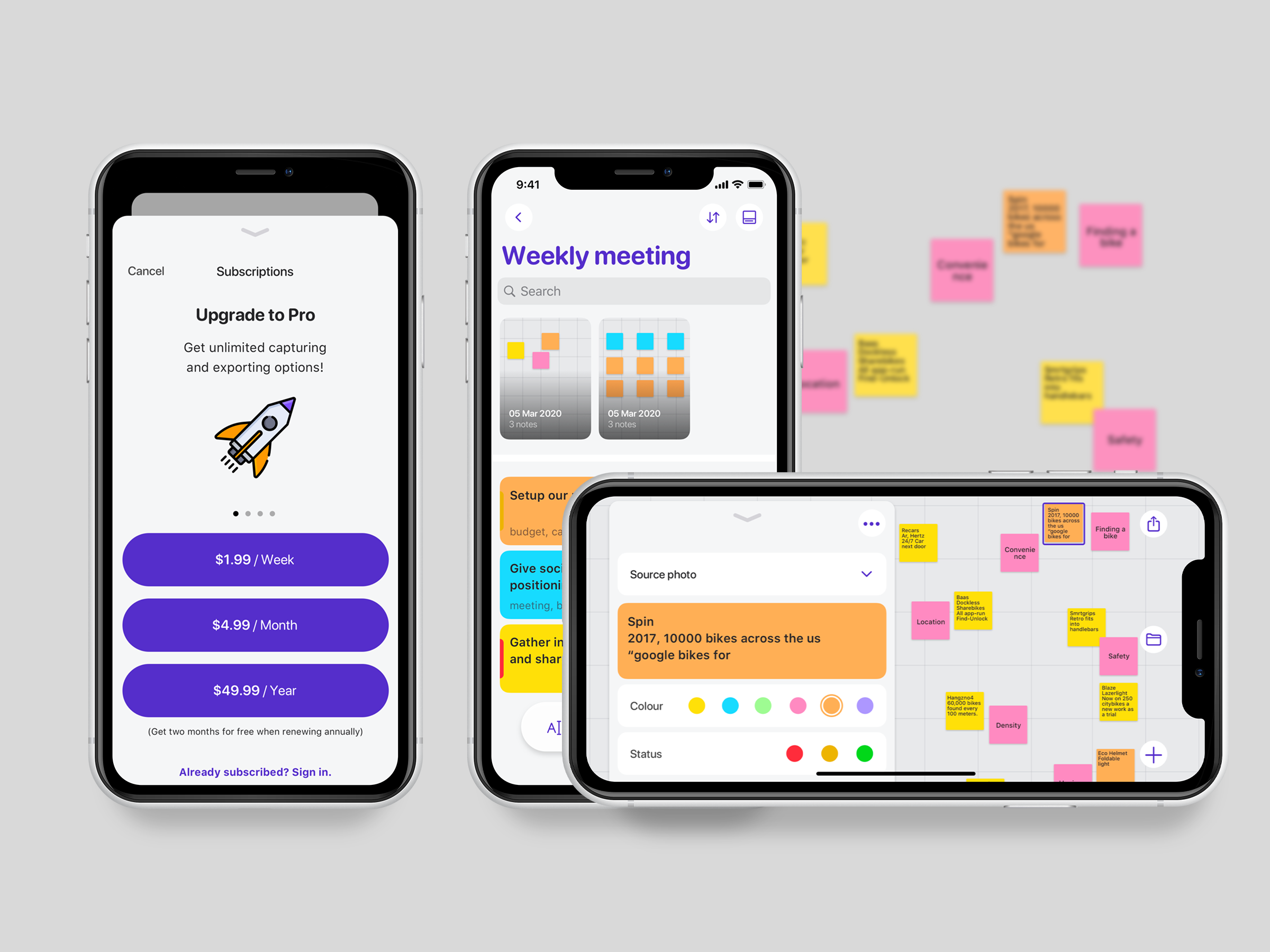
When we eventually launched in the US, we deliberately chose to test the same monetisation model we had used in the UK. The result was immediate and uncomfortable. While the app maintained a 4.7 rating in the UK, it dropped to 3.2 in the US within two weeks. User feedback was consistent: the product was valuable, but pricing and expectations in the US market differed.
This experience reinforced the importance of adapting product and business models to local behaviour, not assuming that success in one market translates directly to another. It also strengthened our discipline around experimentation, rapid feedback and course correction.
This shaped how I approach global product scaling today: validating not only usability, but pricing, positioning and perceived value in each market.
Impact on product direction
The focus on speed and integration shaped the long-term direction of the product. Rather than building a complex platform early, we prioritised a simple, high-impact core experience.
This approach helped create a strong value proposition and supported rapid adoption.
Outcomes
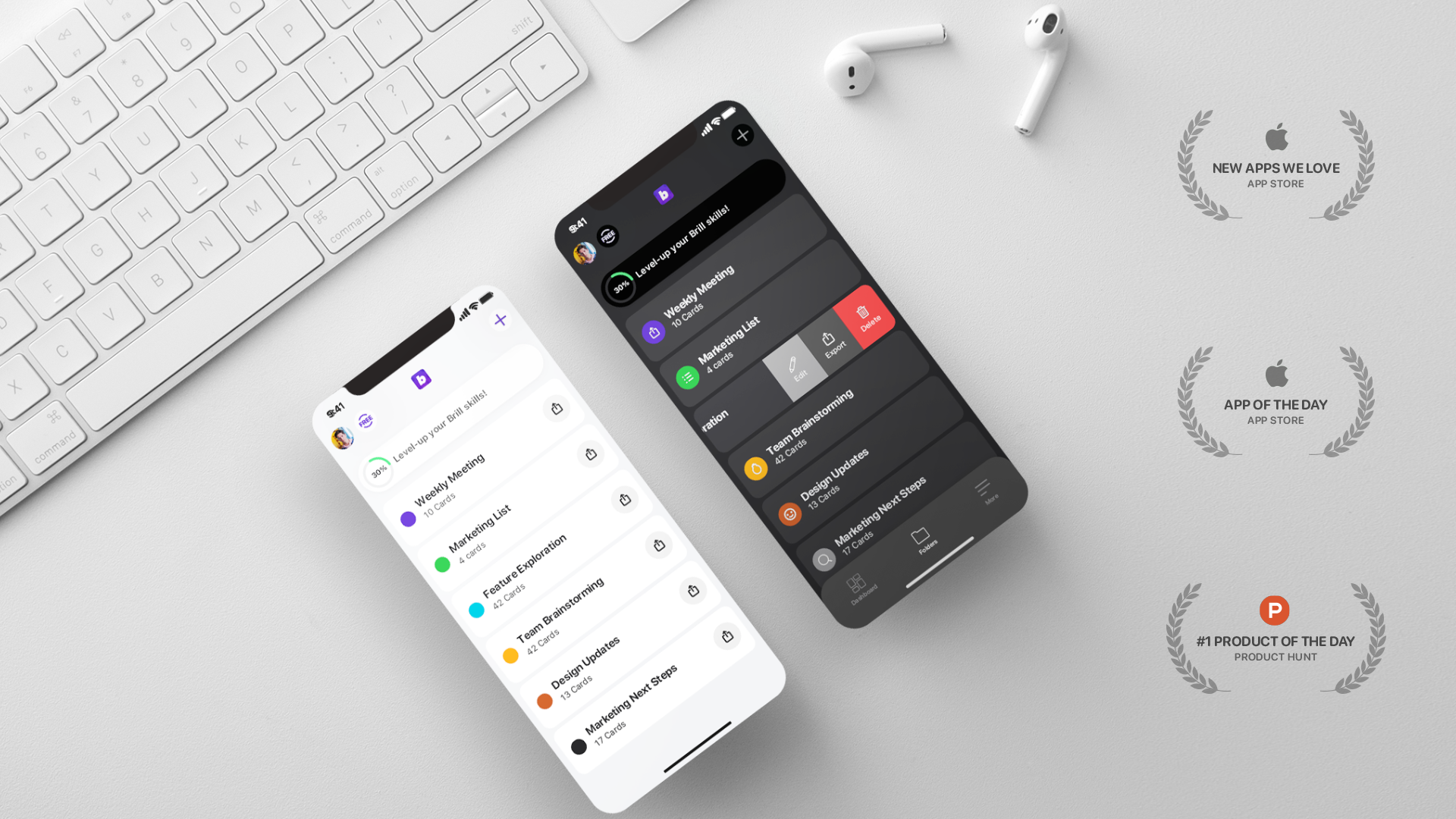
Brill was recognised for its usability, speed and innovation.
Featured by Apple as “App of the Day” twice.
Included in “New Apps We Love.”
Winner of the 2020 Innovation Award.
Successfully launched on iOS and Android within the first year.
Strong user feedback around speed and ease of use.
Rapid iteration enabled the team to respond to changing customer needs
A key trade-off
One of the biggest decisions was resisting the temptation to expand features too early. Many users requested additional functionality, but we focused on protecting the core experience and speed.
This discipline helped maintain clarity and avoid product bloat, reinforcing the product’s differentiation.
Lessons from building Brill
Building Brill shaped how I approach product and leadership today. It reinforced principles that continue to guide my work, whether in early-stage innovation or complex enterprise platforms.
Clarity over complexity — In early-stage environments, complexity is the fastest way to lose focus. At Brill, we protected a simple, high-impact core experience even when stakeholders pushed for broader functionality. This discipline now informs how I simplify complex systems and help teams make better decisions.
Strategy that ships — Vision only matters if it translates into a product that people use. Working from 0→1 taught me to connect product direction with real constraints, trade-offs and execution. This mindset continues to shape how I move teams from exploration to delivery.
Speed as a differentiator — We learned that reducing friction and time-to-value matters more than feature breadth. This continues to influence how I prioritise rapid learning and early value, even in large-scale organisations.
Behaviour over assumptions — Expanding into new markets highlighted how quickly product-market fit can shift. Success in one context does not transfer automatically. Continuous validation of value, pricing and positioning remains central to how I approach discovery today.
Ownership and experimentation — Working in small, fast cycles built confidence and reduced risk. This approach now shapes how I coach teams to think independently, challenge assumptions and take responsibility for outcomes.