Kantan
Designing clarity and automation in high-stakes field workflows
Context
Mobile-first field service and compliance platform scaled from ~3K engineers to 20K monthly active users · Native apps and web · Marketplace and partner ecosystem · Strategic partnership with CORGI HomePlan · 2021–2023
Role summary
Head of Design. Responsible for product and experience direction across mobile workflows, automation and compliance. Partnered closely with leadership to prioritise simplicity, predictability and scalability as the platform grew.
The challenge
Kantan was a fast-growing field service platform used by engineers working in regulated environments such as Gas Safe compliance. The product initially served around 3,000 users, many of whom were acquired through large corporate partners. This created both opportunity and pressure to scale quickly while maintaining reliability and trust.
At the same time, the company entered a strategic partnership with CORGI HomePlan, raising expectations around product quality, automation and operational efficiency. The business needed to demonstrate value quickly to enterprise partners while building a scalable platform.
Engineers often worked in unpredictable conditions, under time pressure, and with real compliance risk. Errors in documentation could have serious consequences. Many competing tools focused on general business management but struggled to support high-stakes workflows in the field.
The business needed to demonstrate value quickly to enterprise partners while building a product that could scale sustainably. This created pressure to balance speed, reliability and usability in a regulated environment.
Scope
I led product and experience direction across mobile workflows, compliance journeys and automation, working closely with leadership, product and engineering teams.
The focus was on simplifying complex tasks, improving predictability, and enabling scalable automation while maintaining user trust and partner confidence.
My role
As Head of Design, I partnered directly with leadership to shape product direction, prioritisation and automation strategy during a period of growth and partnership expansion.
I was responsible for:
defining product and experience principles
influencing roadmap decisions and trade-offs
aligning stakeholders across product, engineering and commercial teams
embedding mobile-first thinking
mentoring designers and building design capability.
Key moves
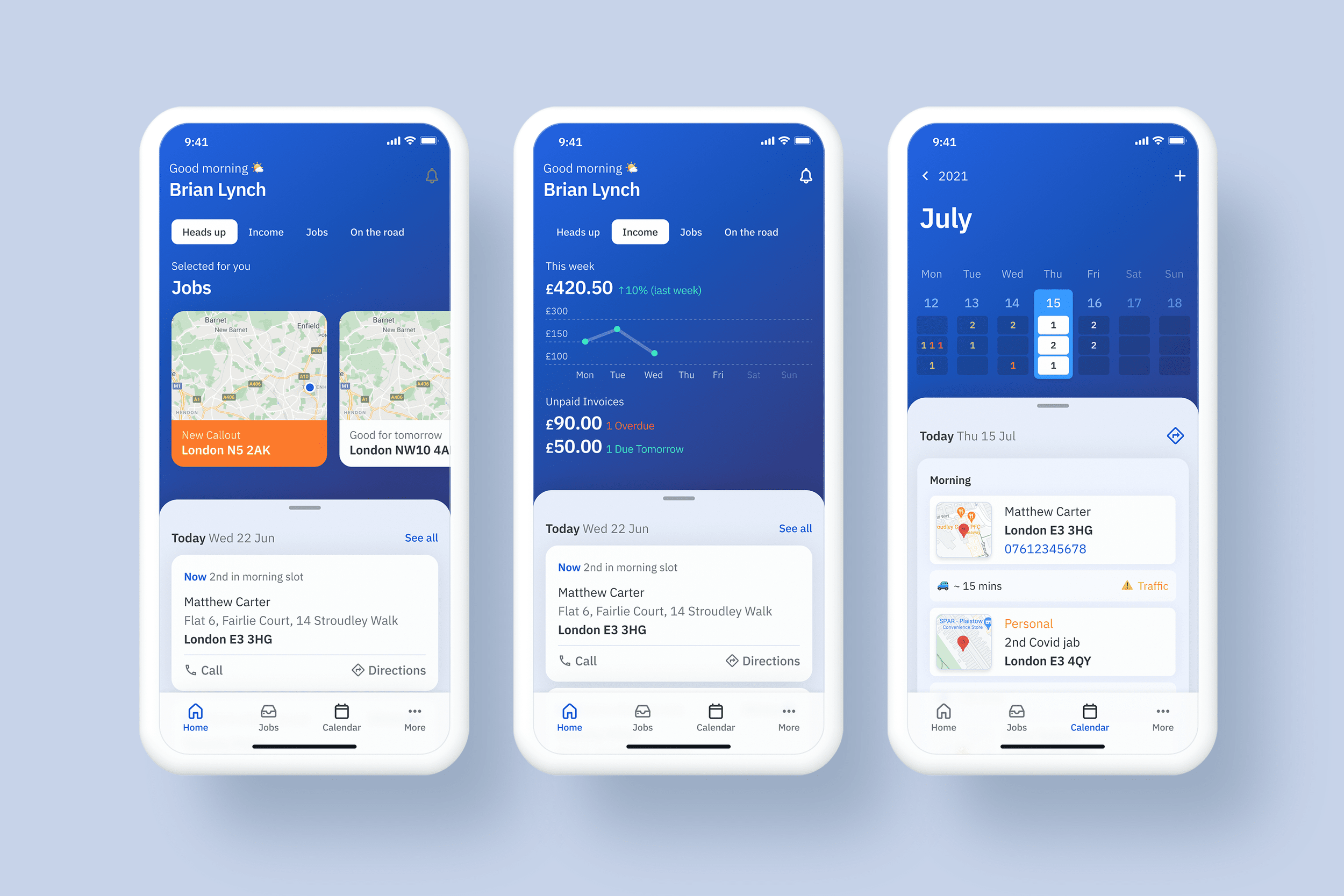
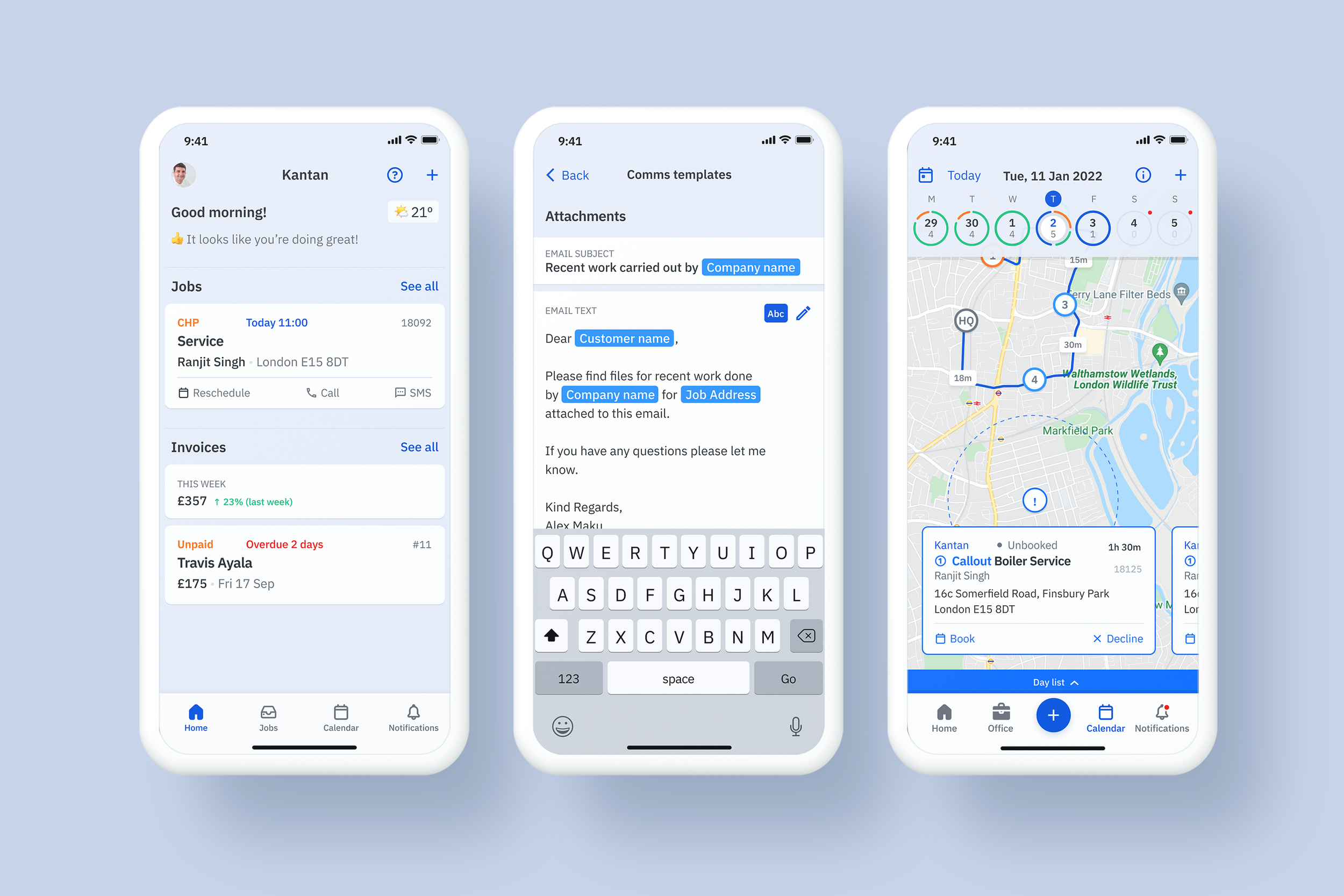
Mobile-first, thumb-friendly design
We prioritised real-world usage: engineers working on-site, often with one hand, under time pressure. This led to a predictable, consistent interface designed around speed and clarity.
Simplifying compliance workflows
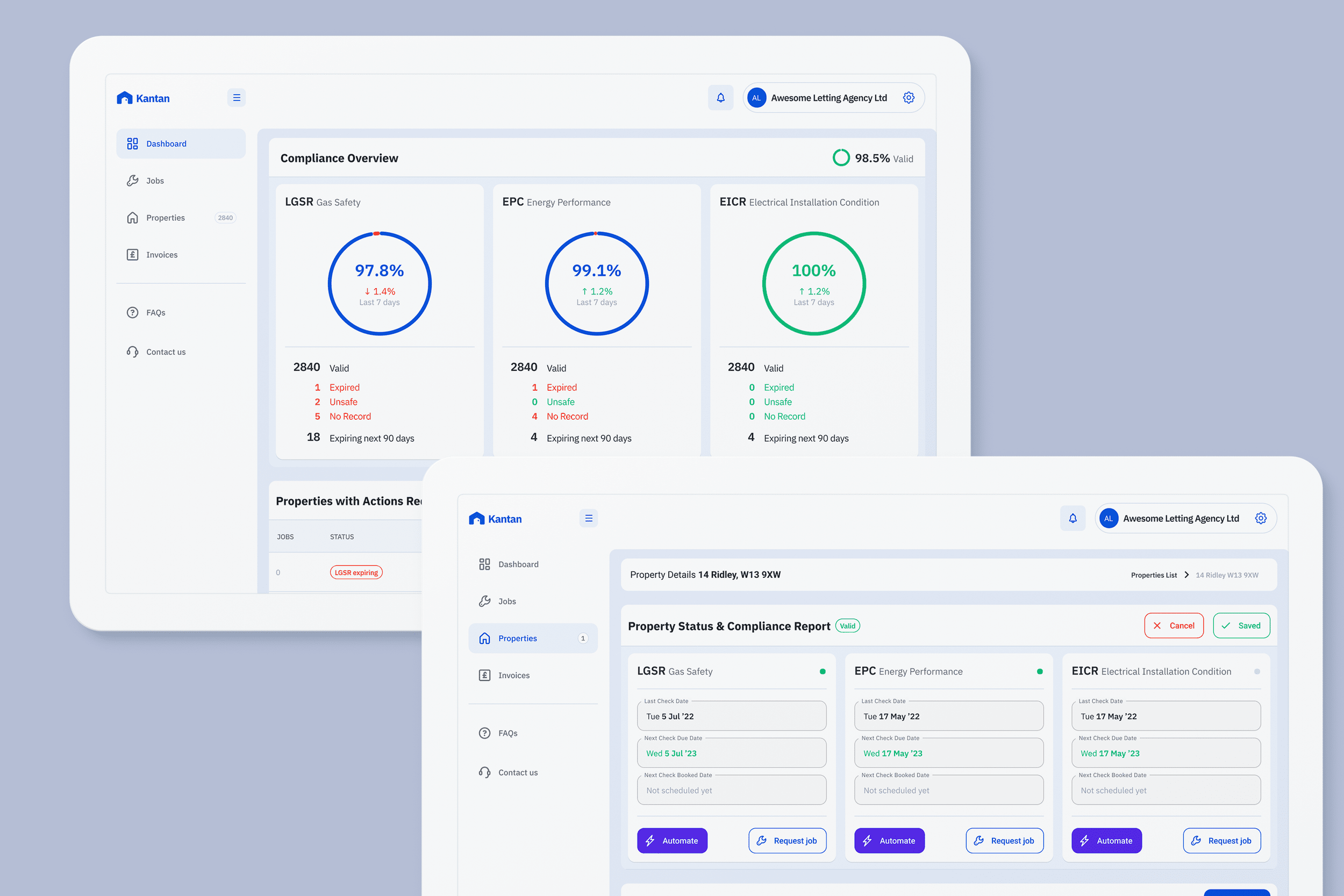
Core journeys such as Gas Safe documentation were redesigned to reduce cognitive load and error risk. The focus shifted from feature flexibility to clear decision pathways.
Predictable automation
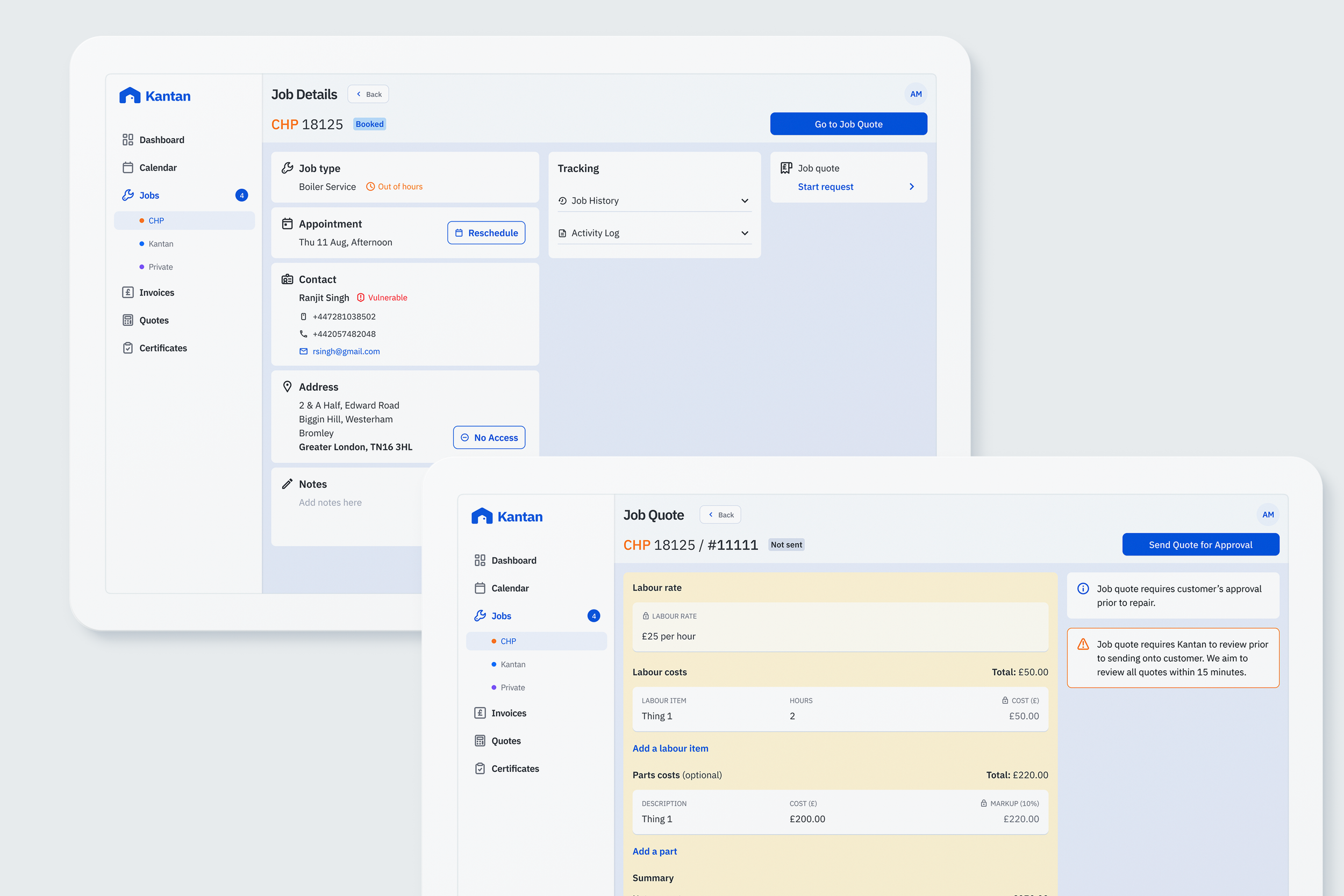
The Autobook system translated complex scheduling logic into a simple, controllable experience. Engineers defined constraints once, and the platform handled bookings automatically. This balance between automation and control increased trust in the system.
Reducing friction in access and onboarding
Introducing passwordless “magic link” login reduced login barriers and support overhead, particularly for users in the field.
From paperwork to workflow platform
Automated generation of quotes, invoices and compliance documents enabled engineers to complete transactions on-site, transforming the product from a record-keeping tool into a daily operational platform.
Impact on product direction
The work shifted Kantan’s focus from feature breadth to clarity, predictability and automation. This helped position the platform as a trusted daily tool rather than a secondary admin system.
It also influenced how future features were prioritised, focusing on decision support, real-time workflows and operational confidence.
Outcomes
The product became known for its usability and predictability in a sector dominated by legacy software.
Reduced training and onboarding time by 20% by creating predictable, consistent workflows.
Increased daily engagement (×10) and reliance (×3) on the platform for core operational tasks.
Strengthened trust in automation and scheduling.
Reduced support overhead by simplifying access and documentation.
Improved partner confidence and commercial credibility.
Positioned Kantan as a differentiated, mobile-first platform in a market dominated by legacy software.
A key trade-off
One of the hardest decisions was balancing flexibility with predictability. Stakeholders often pushed for highly configurable workflows, but research showed that complexity reduced trust and slowed adoption.
We prioritised simplicity and clear constraints. While this limited some edge cases, it increased confidence, improved usability and shaped the long-term product strategy.
What I learned
Designing for high-stakes environments is less about features and more about decision support. Clarity, predictability and trust matter more than flexibility.
This experience continues to shape how I approach platform and AI-driven products today.